A Colorado Artist at Heart
How Cora Wheeler Turned Passion into Paint

Photos Courtesy of Cora Sexton Wheeler
Colorado native Cora Sexton Wheeler wasn’t always an artist, but when she wanted a specific piece of art for her home and couldn’t find what she was looking for at an affordable price, she decided to make it herself. Wheeler’s willingness to try something new gave this former dental assistant a new passion for using her artistic instincts to create unique, interactive and beautiful pieces that have attracted the art world. We caught up with Wheeler to talk about how she turned her passions into paintings.
Have you always wanted to be an artist?
When I was young I dreamed of being an artist but never thought it could be a reality. I thought it could only be a hobby. Instead, I pursued my interests in biology and medicine. I grew up in the dental world and figured I would follow my dad’s footsteps into pediatric dentistry.

Where did you grow up, and does that affect your work?
I grew up in Arvada and Durango—very different ways of life. During the week, I lived a city life, and on the weekends we would drive to Durango to work on our family’s ranch. My work is most definitely infused with my juxtaposed upbringings. Driving to and from the ranch, we would go through seven mountain passes. I paint a lot of pieces depicting the mountain ranges, speckled with cattle or even bison, while still being layered with inspiration from city life.
What first got you into art?
I grew up loving elementary school art class and creating projects at home. From origami to 3D models to drawing to jewelry making, I loved trying everything—and my parents always encouraged creativity and the different paths to apply it.
My aunt is a juried artist in Hawaii, and I always admired her talent to paint and draw. I would study her sketch books and play around with her charcoals.
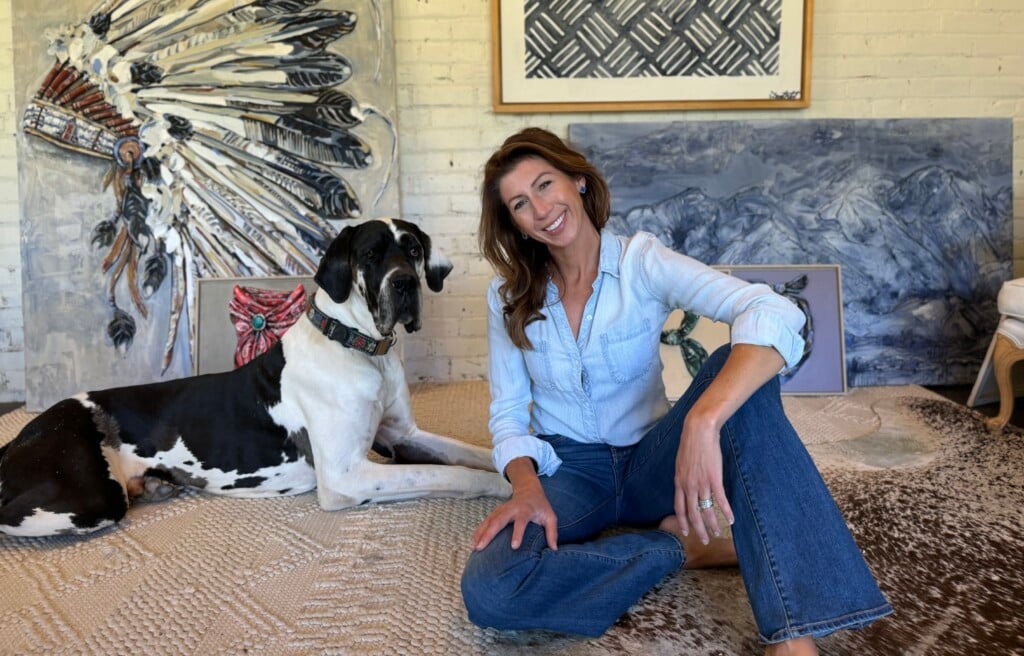
When I was in my late 20s, I wanted art for our home but couldn’t afford gallery work, so decided I would create something for our walls. I have always been inspired by Native American art, culture and clothing, so I decided to paint my first headdress for our family home.

Where do you find inspiration?
Inspiration comes from the drives to the ranch, ranch life and views, studying Native American heritage, the natural world, fashion, other artists, textures—anything that makes me want to touch it and go deeper.
Being an artist has really helped the way I look at things around me. I’m always taking pictures of random patterns or of the Colorado skies or mountains. I literally find inspiration everywhere, and I’m so thankful to be in Colorado; it drives so much of my desire and inspiration to paint and create.
What themes or messages do you find yourself drawn to in your art?
Ultimately, I’m drawn to texture and wanting to touch the art. I’m also drawn to the heritage and history of the Western lifestyle. I want to create pieces that make people happy or bring back a memory that makes them feel good or just adds another beautiful layer to a home. I really enjoy working with clients to create a piece because then they’re more invested in it and enjoy it more.
What materials or tools do you use?
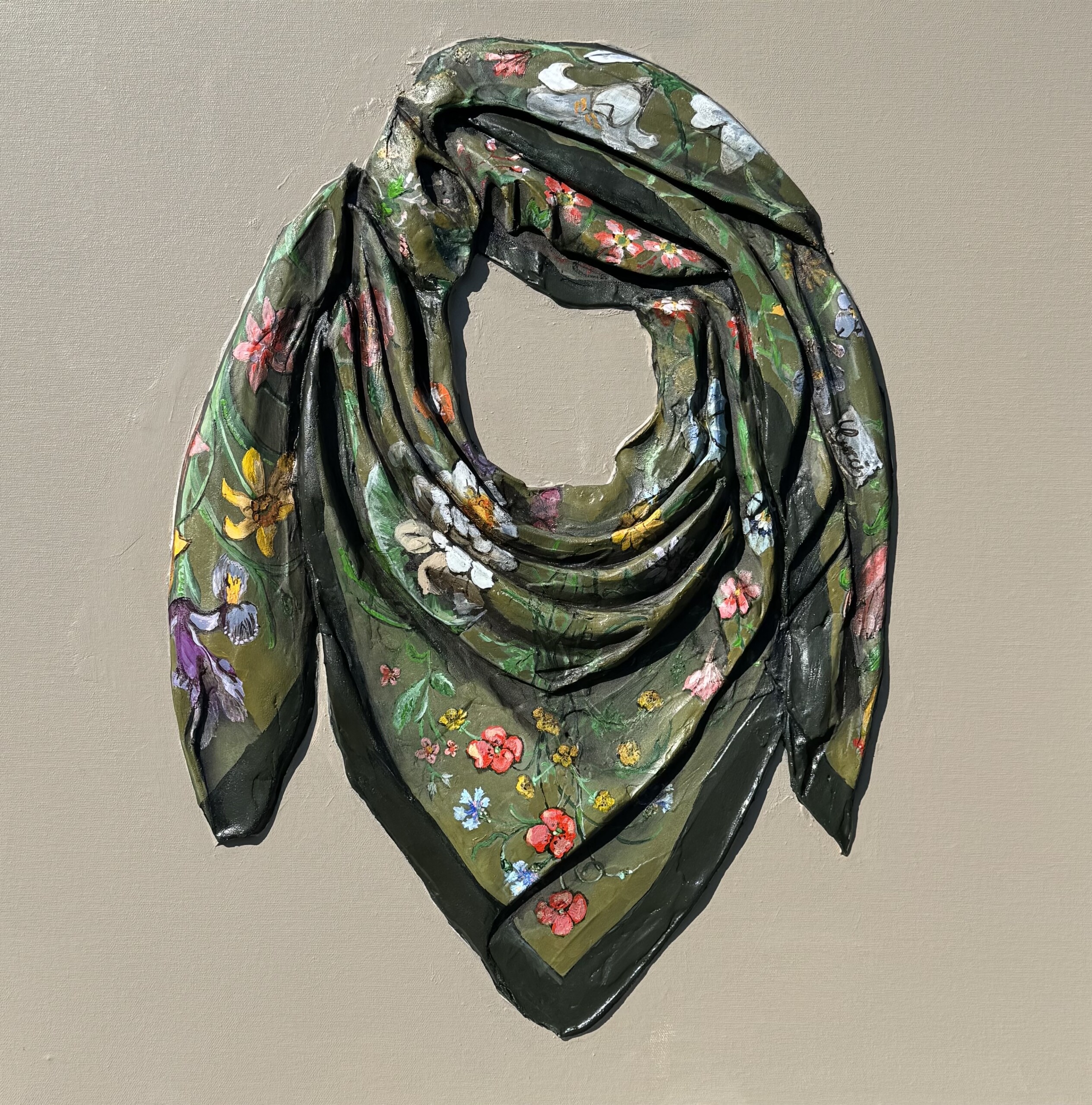
I use some unconventional tools to create textures and sculpt the shapes I want. Anything from a spatula to dental tools, blankets with texture and, of course paintbrushes, lightweight sculpting paste, acrylics, and gold or silver foil.
What techniques do you use to achieve a certain effect?
I sculpt with a lightweight paste to create a three-dimensional form. Once the material has dried and hardened, I sand and smooth the sculpture. Next, I paint the form using acrylic paint. Sometimes clients want a modern look, so I pour an epoxy resin over the piece to give it a high-gloss finish.
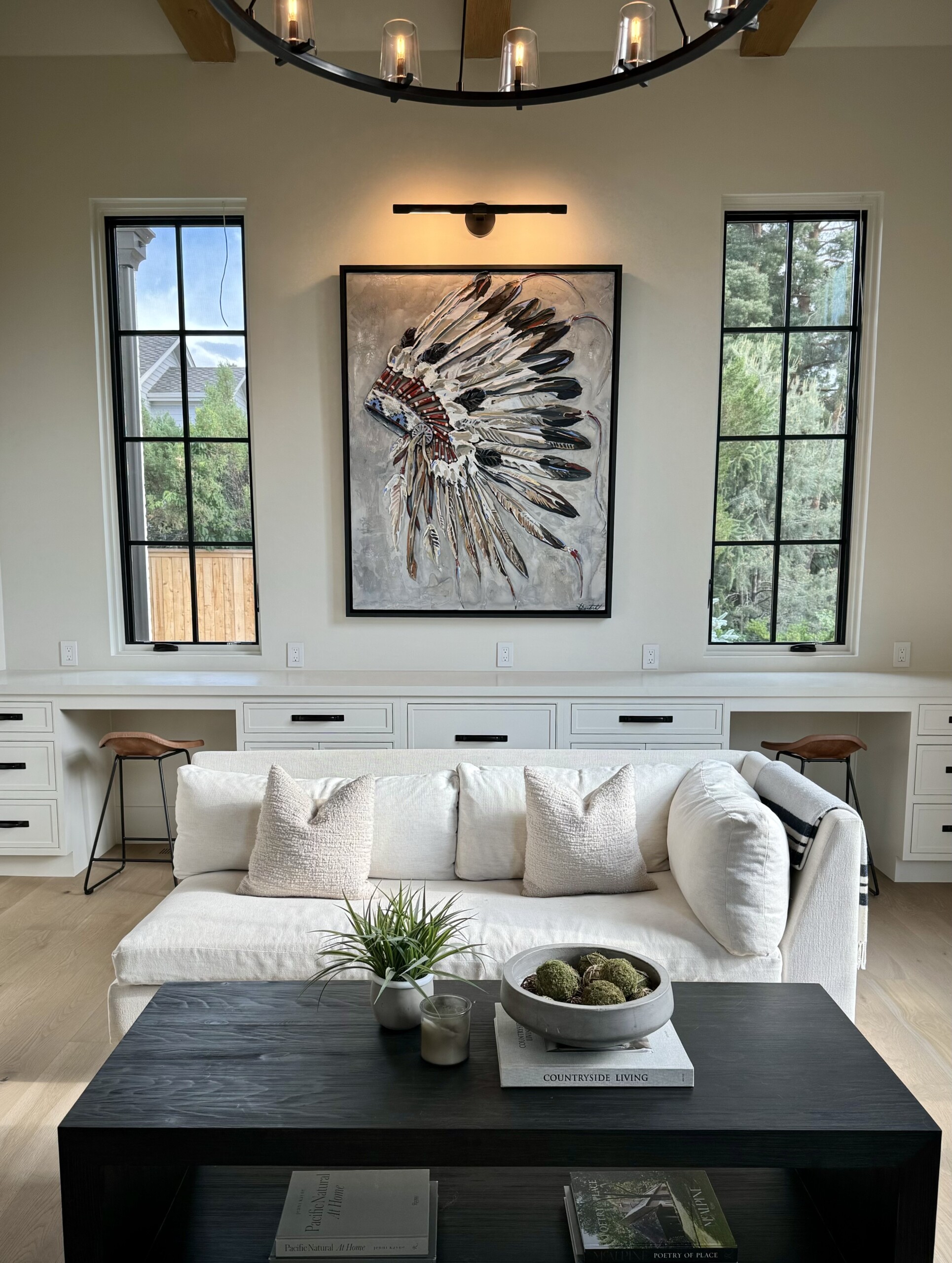
Can you describe your artistic process from concept to completion?
If I am working on the piece for myself, I tend to try something new. With clients requesting a commission, we come up with the concept together I then put together a color palette and sketch of the piece for approval. The next step is to put the concept onto canvas by sculpting it, followed by numerous color washes. After getting the base colors down, I begin to paint the bison or the wild rock patterns or the other details. The final step, if the client requests it, is creating that high-gloss finish.
What role does research play in your artistic process?
Whether it’s going to art museums, talking to other artists, visiting an art show, checking out a new gallery or going to the annual antique shows in Round Top, Texas, I am always looking to see what other makers are creating. I also like to attend different art classes to learn new techniques.

What experiences have been most important in developing your work?
One of my favorites was getting to work on a painting with clients who recently purchased some bison. I got to paint the bison from a photo and then visit the herd at the ranch. It was such a treat to get to see the magnificent animals and also bring my family.
At one point I helped create flower arrangements for weddings. I found this valuable to my art career by helping me learn which color combinations work well together and how to develop multiple layers of colors. A lot of my art is also sculptures of flowers, and it’s helped to know the folds, curves and textures of different types of petals that I want to mimic onto canvas.
Also, being a part of Young Guns with the Coors National Western Art Show has been a huge honor and has helped to create a wider audience for my work. I am thankful to get to show with so many talented artists.
What’s next on your artistic journey?
I hope to keep developing and continue cultivating work for collectors in Colorado as well as other Western locations. I would love to get connected to other ranches and just see what else is out there that I can then portray on canvas.
Cora Sexton Wheeler